Paint makes a wall clean. Vinyl makes it durable. Fabric makes it feel expensive - and quiet. Here is the full guide to wall fabric in Cambodia: the types, the acoustic numbers, the humidity rules, and what it costs.
Designers reach for fabric wallcovering - wall fabric, wall cloth, textile wallcovering, the names vary - when a room needs warmth and depth that flat finishes cannot deliver: hotel suites, boardrooms, fine-dining rooms, villa master bedrooms. In Cambodia it has one extra advantage that is easy to underrate: in buildings full of tile, glass and concrete, fabric is one of the few finishes that softens sound while it decorates.
The five types of wall fabric
- Backed textile rolls. Woven fabric laminated to a paper or non-woven backing, hung like wallpaper. The workhorse of fabric walls: linen weaves, wool blends, silk-look finishes.
- Grasscloth and natural weaves. Jute, sisal, bamboo and cork textures, each roll subtly unique. Tactile and organic - a strong match for Cambodia's current resort-design direction.
- Suede and velvet wallcovering. Deep, light-absorbing surfaces for lounges, cinema rooms and KTV - dramatic under warm lighting.
- Stretched fabric systems. Site-stretched fabric over a frame with an absorptive core. This is the acoustic heavyweight: the fabric is the finish, the core does the sound work.
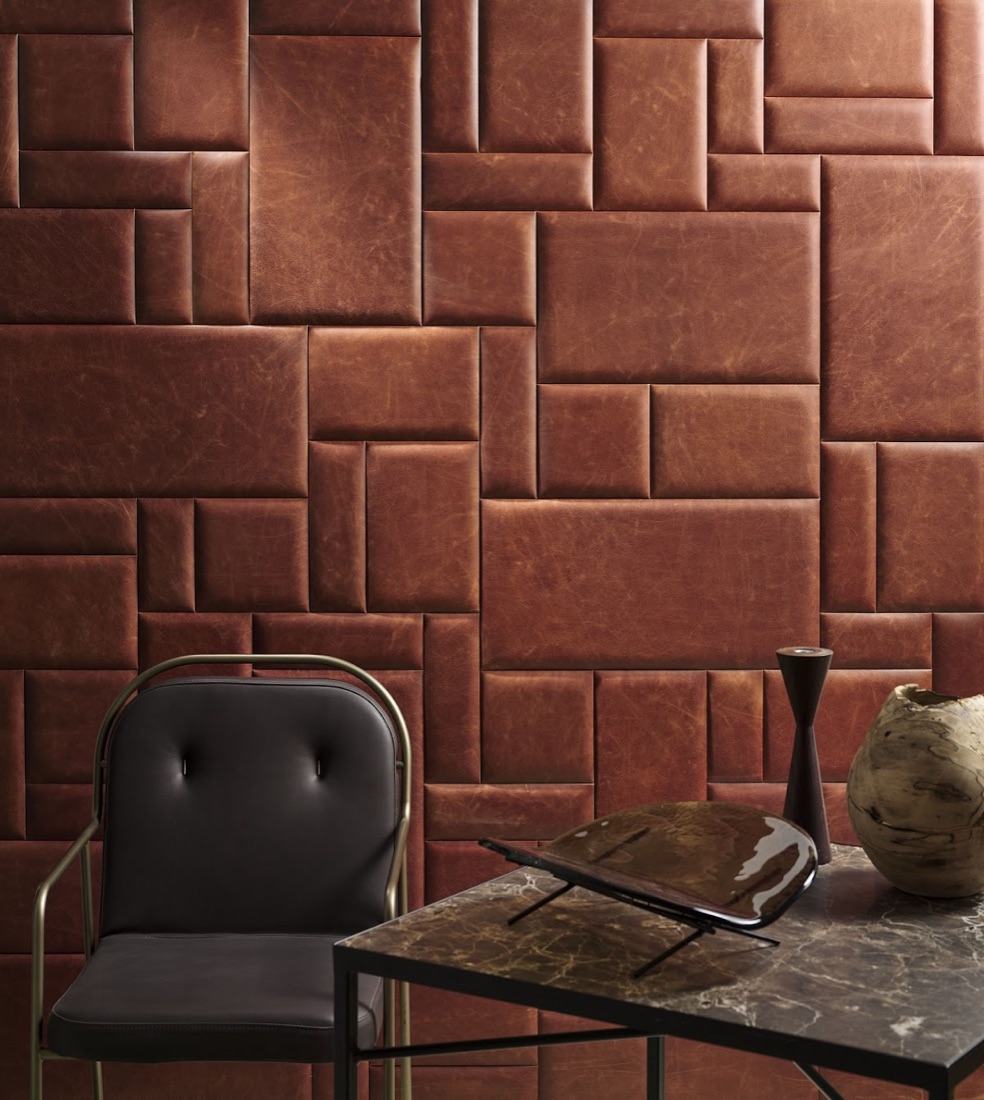
- Upholstered / padded fabric panels. Foam-backed panels - headboard walls, banquette surrounds, corridor accents - combining softness, impact protection and acoustic damping.
The acoustic case for fabric walls
Hard surfaces reflect sound; textiles absorb it. A textured fabric wallcovering takes a meaningful edge off echo in a room - industry testing credits fabric and textured wallcoverings with absorbing a noticeable share of sound reflections, which is why restaurants and lobbies feel calmer with them. When sound is the primary goal, step up to a stretched fabric system: with an absorptive core these reach NRC ratings approaching 1.0 (near-total absorption), versus roughly 0.2-0.4 for decorative acoustic wallcoverings alone.
| Solution | Typical NRC (sound absorption) |
|---|---|
| Standard fabric wallcovering | 0.05 - 0.20 |
| Acoustic-grade wallcovering | 0.20 - 0.40 |
| Padded / upholstered panels | 0.40 - 0.80 |
| Stretched fabric system with core | 0.85 - 1.00 |
Where fabric walls earn their keep
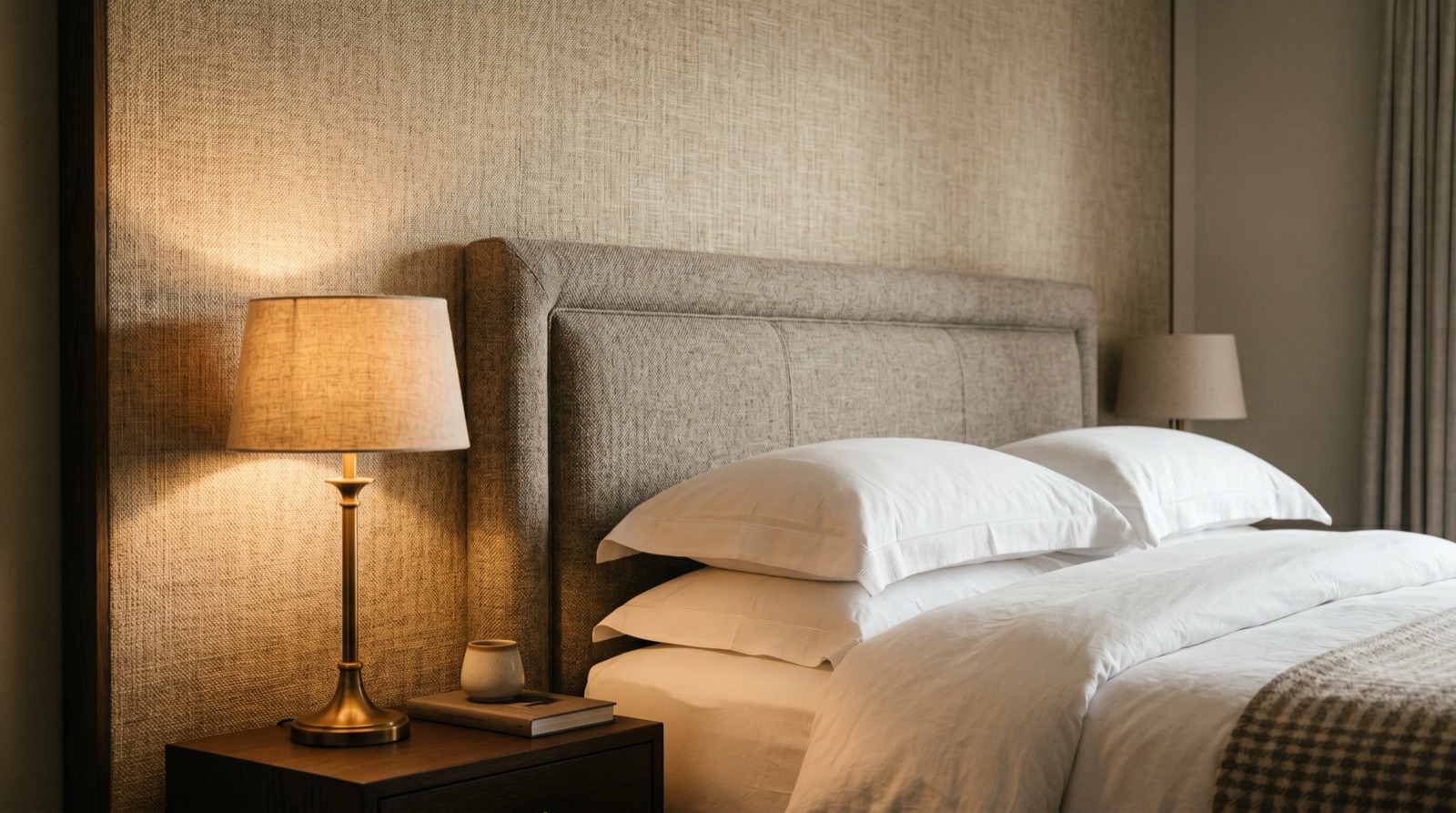
- Hotel suites and headboard walls - the single highest-impact upgrade in a guestroom photo.
- Boardrooms and meeting rooms - speech stays intelligible; video calls stop echoing.
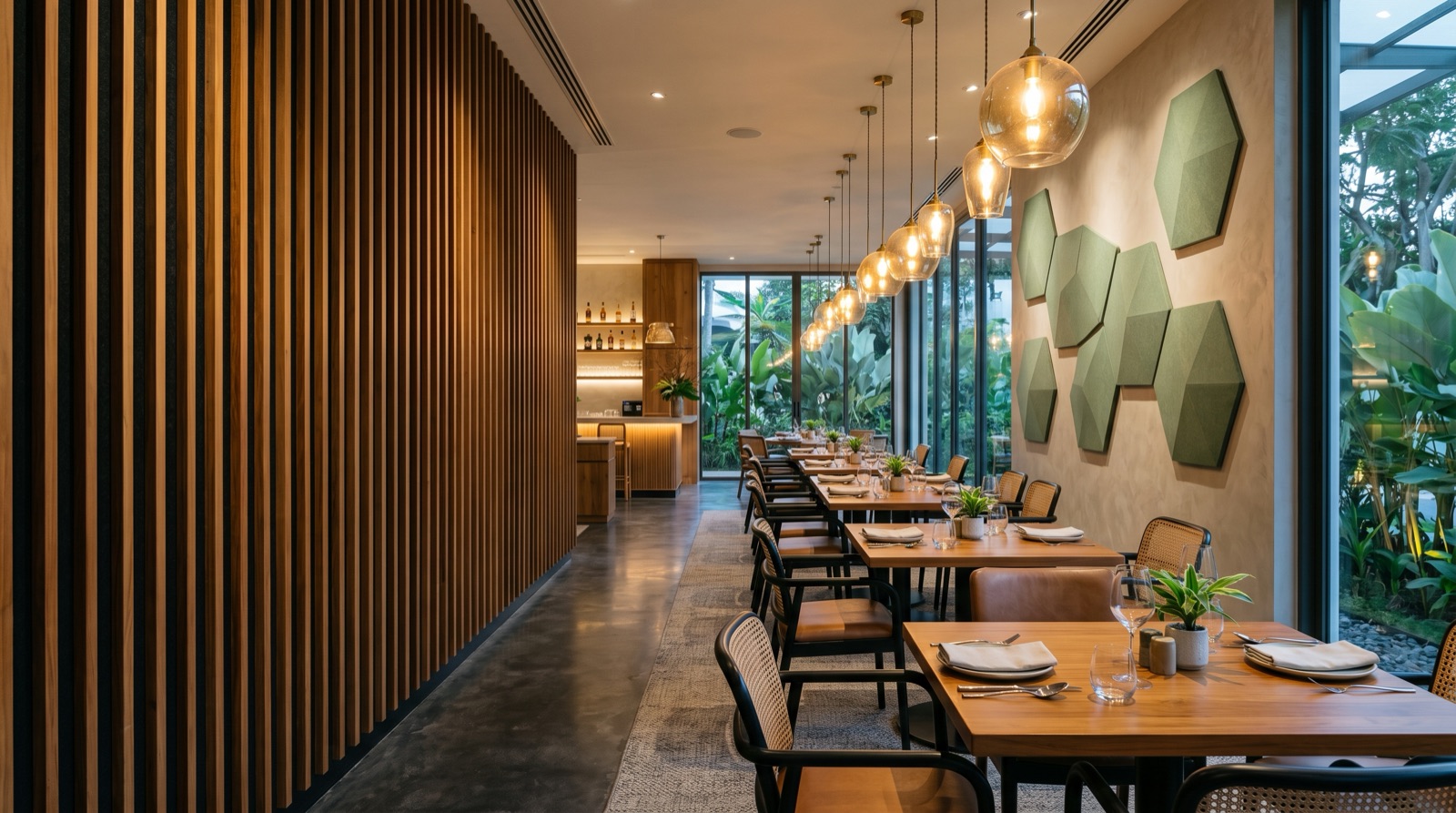
- Fine dining and lounges - conversation-level acoustics are a luxury guests can feel but rarely name.
- Cinema, KTV and casino rooms - suede and stretched systems handle both the look and the sound pressure.
- Villas - master bedrooms and studies, where texture replaces clutter as the source of warmth.
Fabric walls in a tropical climate: the three rules
Rule one: dry substrate. Fabric forgives nothing underneath - walls must be fully cured and dry before installation. Rule two: mould-resistant backing. Specify treated, breathable backings made for humid markets; we stock ranges selected for Southeast Asia. Rule three: right room. Air-conditioned interiors are ideal; keep fabric out of bathrooms, unventilated kitchens and exterior-exposed walls.
Fire rating and specification
For hotels and public buildings, specify textiles tested to NFPA 701 or wallcoverings rated Class A (ASTM E84) / EN 13501-1, and keep the data sheet on file - our fire-rating guide explains the standards. Every fabric we supply comes with a data sheet within one working hour and a signed Spec Lock Certificate confirming the delivered batch matches your approved sample - critical with textiles, where dye-lot variation is even more visible than in vinyl.
What wall fabric costs in Cambodia
| Type | Indicative supply |
|---|---|
| Backed fabric / textile rolls | $12 - $40 / m2 |
| Grasscloth and natural weaves | $15 - $45 / m2 |
| Suede / velvet wallcovering | $18 - $50 / m2 |
| Padded fabric panels | quoted per design |
| Stretched acoustic fabric systems | quoted per project |
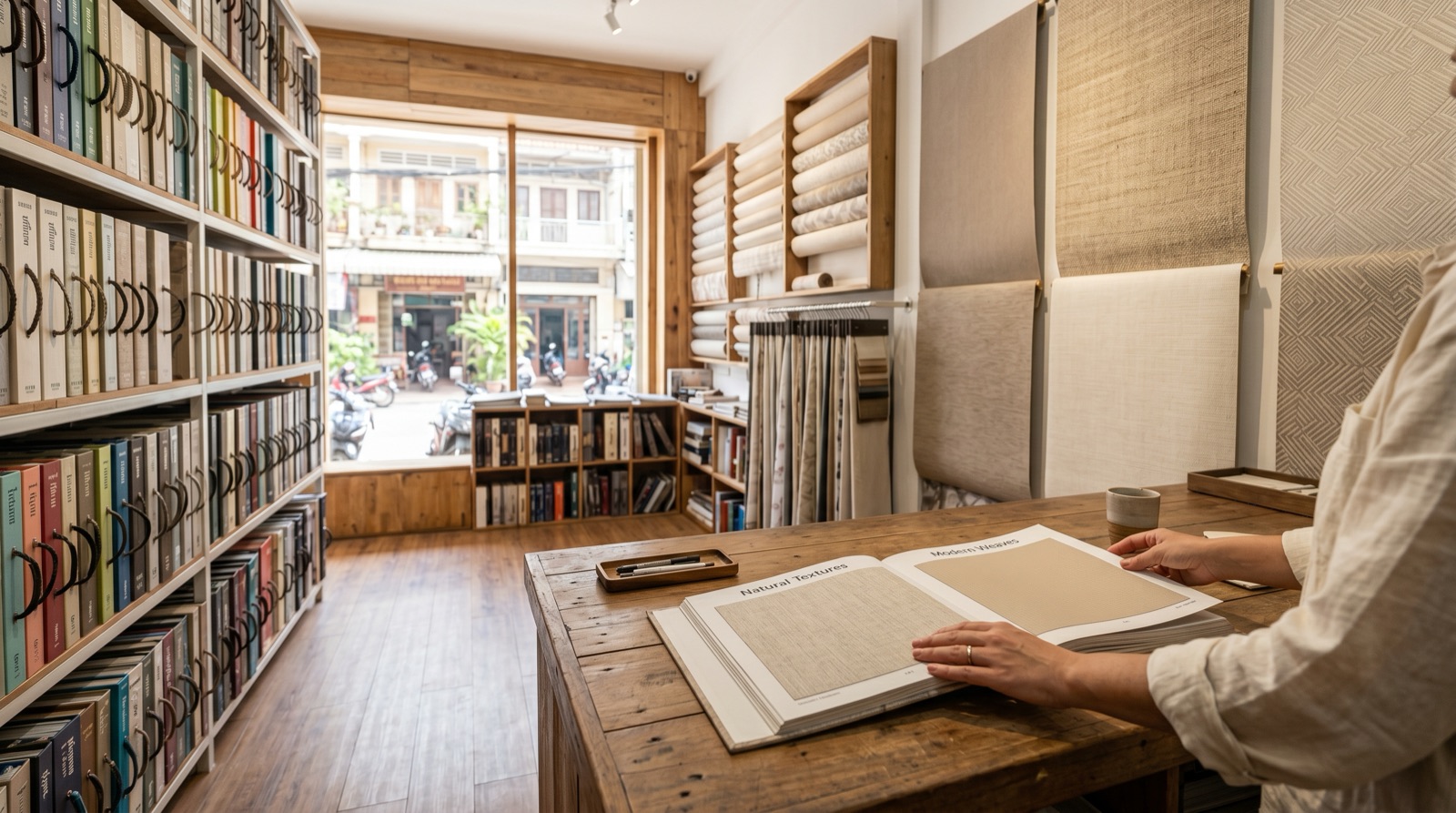
Browse fabric ranges in the catalog, see them installed in our projects, or handle the weaves in person at the Phnom Penh showroom.