Guests decide what your hotel is in the first thirty seconds, standing in the lobby with their bags. Rooms keep the promise; the lobby makes it. Here's how to build that first impression out of materials that survive luggage wheels, humidity and ten years of traffic.
A lobby is the hardest-working room in the building. It's a reception desk, a lounge, a waiting area, a photo backdrop and a thoroughfare for trolleys, all at once. Materials that look wonderful in a supplier brochure can be scuffed and tired here within a year. So this guide is organised the way we actually talk through lobby jobs with owners: surface by surface, with the trade-offs out loud.
The feature wall: pick one hero and commit
Every memorable lobby has one wall doing the talking - usually behind reception. The options we supply most, in rough order of current demand:
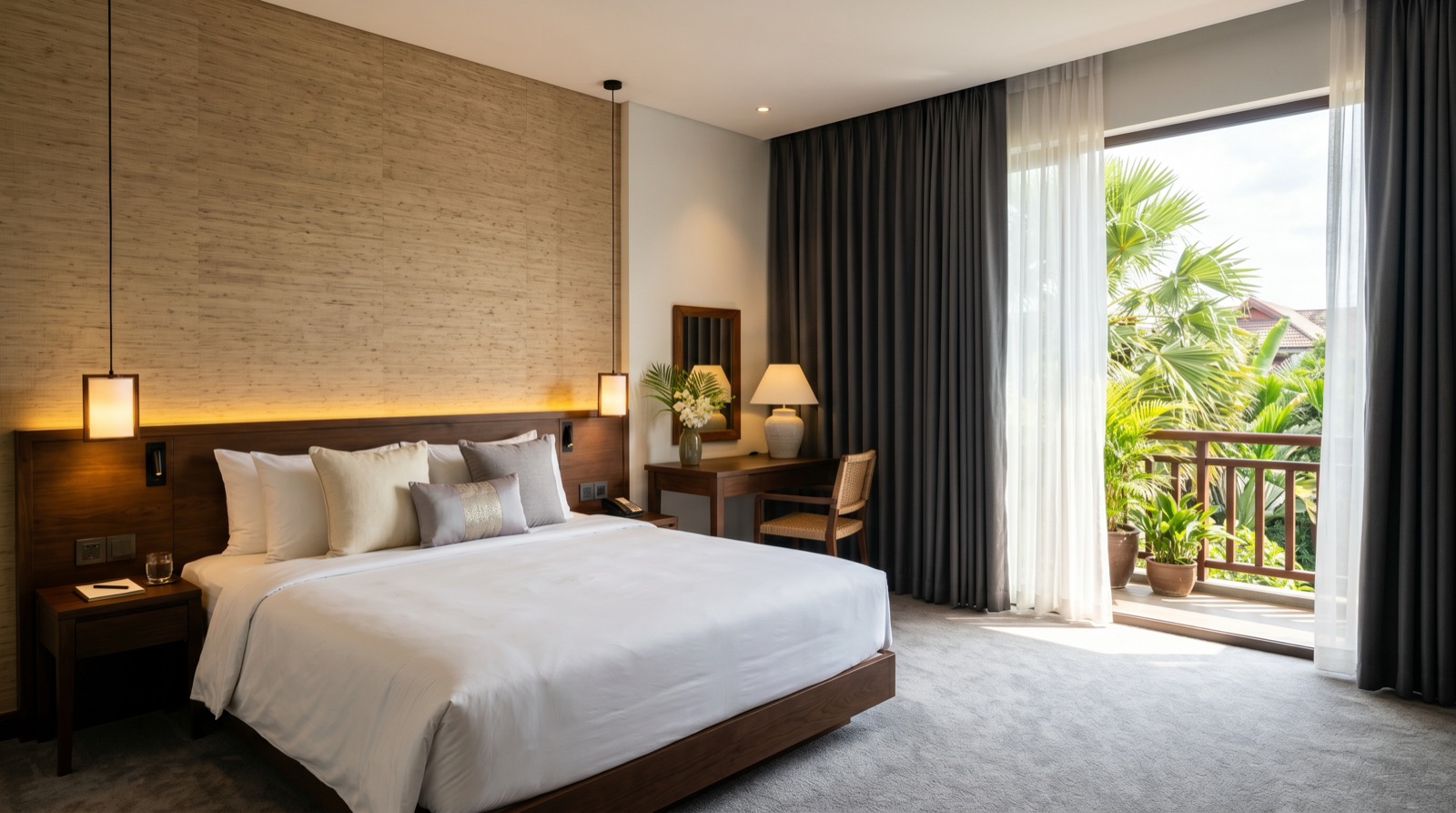
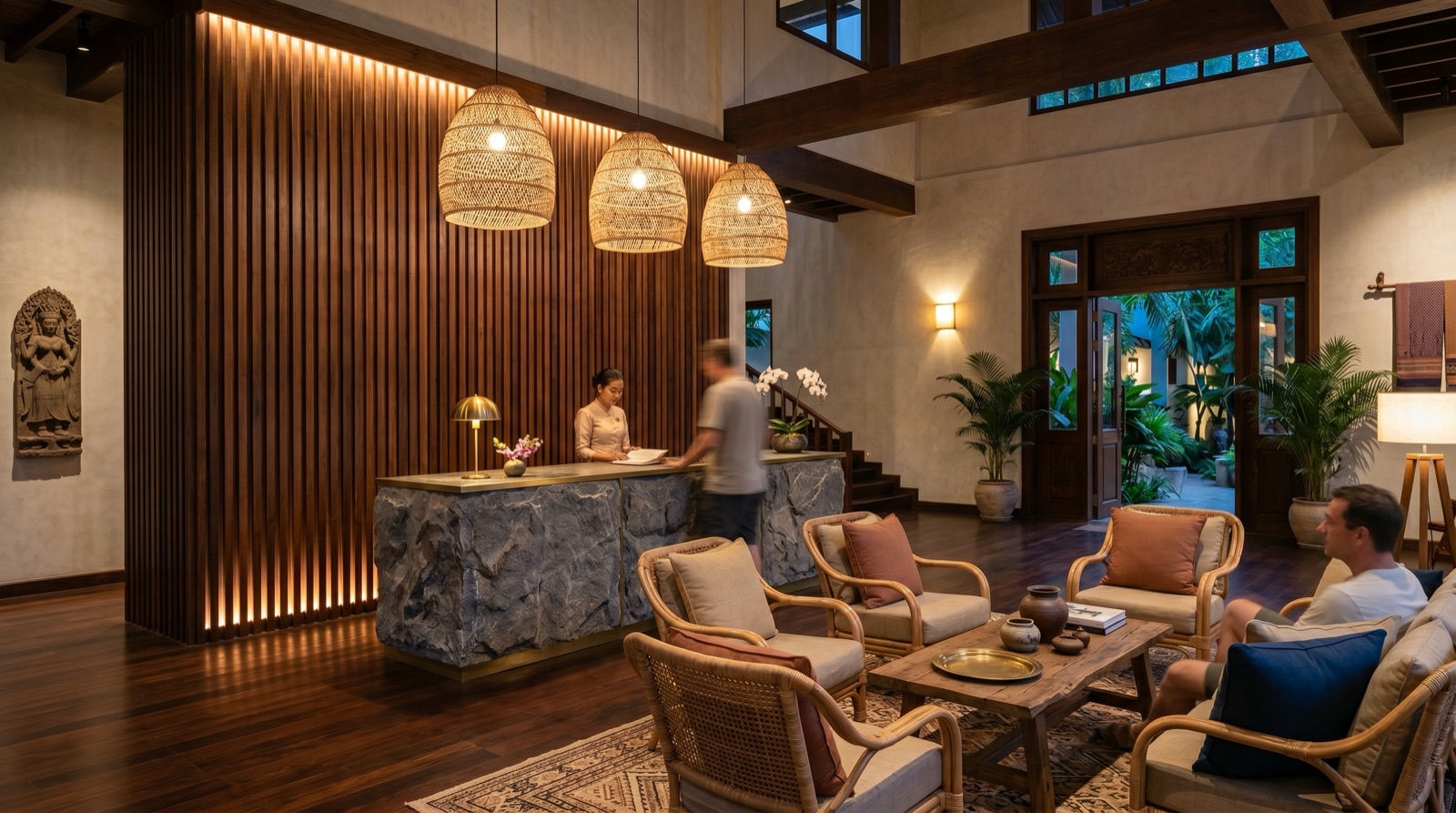
- Timber slat on acoustic felt. The defining hospitality look right now, and it quietly fixes the echo problem at the same time.
- Custom digital print. Your artwork, a commissioned illustration, an archival photograph of the neighbourhood - printed to the exact wall size. Strongest when the property has a story.
- 3D sculpted panels. Relief and shadow that change with the lighting through the day. Pairs well with a restrained palette.
- Wall leather. Padded panels behind reception read unmistakably premium. Used sparingly, they justify their price.
One hero wall, supporting cast everywhere else. Two feature walls in one sightline compete and both lose.
Floors: where lobby budgets go to die, or last 15 years
Lobby flooring takes luggage wheels, grit, rain tracked in from the street and the occasional dropped suitcase. Stone and heavy porcelain remain the default for good reason. The upgrade move is a carpet inlay under the lounge seating - it zones the space, softens the acoustics, and the hard path stays hard where the trolleys run. Specify a dense commercial broadloom or a rug built from carpet tile so worn sections swap out instead of condemning the whole inlay. Our flooring guide and carpet guide carry the specs.
The sound of an expensive lobby is quiet
Walk into a luxury lobby and listen. Conversations stay where they happen. That's not the architecture being polite - it's absorption, designed in. Glass, stone and double-height ceilings need it most, which describes most new Cambodian lobbies.
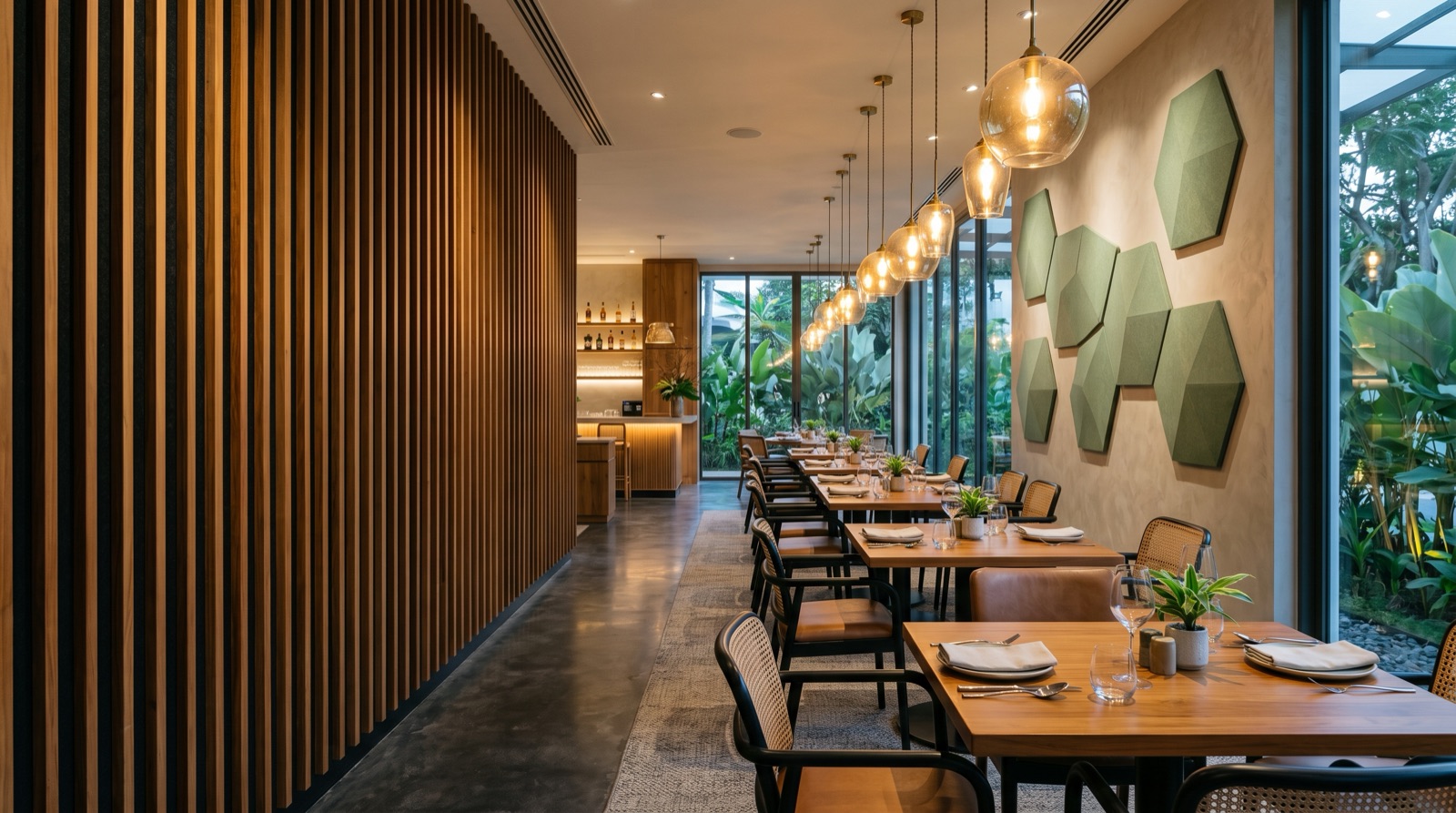
The treatments that work here are the ones that don't look like treatments: the slat wall already mentioned, fabric-wrapped panels above the seating, printed acoustic art that reads as decor. As a working rule, cover 15-25% of wall area with absorptive material. The full menu with NRC numbers is in our acoustic decoration guide.
Khmer identity without the cliche
The temptation is to bolt Angkor onto everything. The properties getting it right do something quieter: they borrow the craft rather than the icons. A woven kroma pattern abstracted into a wallcovering. Local hardwood tones in the slat work. Brass details that nod to temple hardware without reproducing it. One genuinely good commissioned piece instead of ten printed ones.
This matters commercially, not just aesthetically. International chains can buy any look except authentic locality. It's the one design asset an independent Cambodian hotel holds outright.
Light in layers, switched in scenes
Materials only perform under the right light. The working formula: ambient base kept warm (2700-3000K), accent lighting raking across the feature wall texture, task light at the desk, and table lamps in the lounge so evening guests sit in pools of light rather than under a ceiling grid. If the budget allows one control upgrade, make it scene switching - morning, afternoon and evening lobbies should not share one lighting state.
Compliance, briefly, because inspectors don't care about your mood board
Everything vertical in a lobby needs fire documentation - Class A (ASTM E84) or EN 13501-1 for wallcoverings and panels. Keep the data sheets filed. We hand them over within a working hour, and our fire rating guide explains what the codes actually mean.
Phasing a lobby without closing the front door
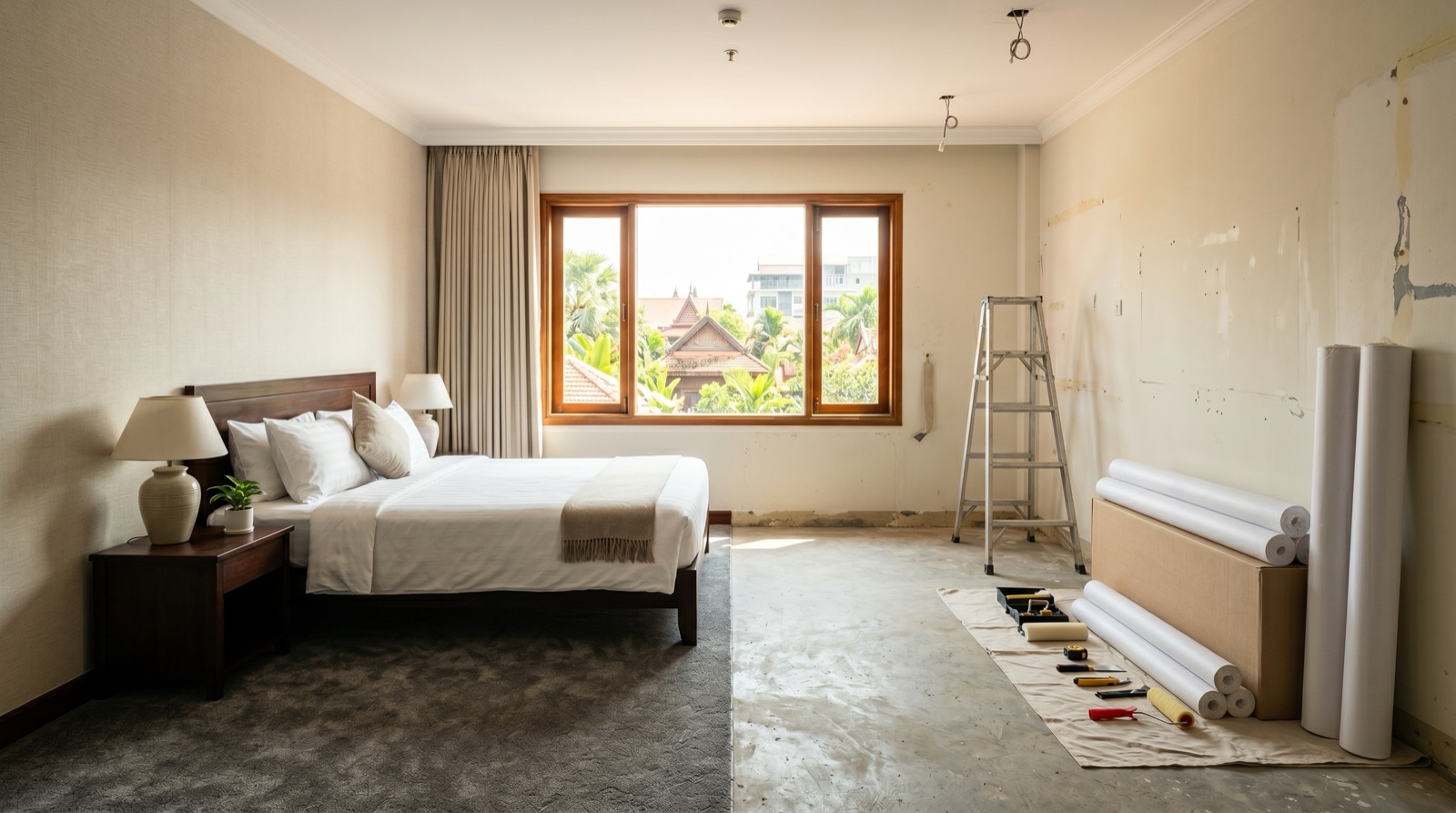
Lobbies get renovated in zones, mostly at night: reception wall first (highest impact, smallest area), then the lounge zone, then flooring last because it's the most disruptive. Materials staged on site before anything starts. A lobby zone that's half-stripped waiting on a late shipment is the worst version of your hotel, on display at check-in, every day it slips. Written delivery dates exist for exactly this - and ours come with the on-time-or-we-pay guarantee, the same terms behind the lobbies in our project list.