Cambodia's tourism is climbing back, new airports are open, and most of the country's hotel stock still looks like the year it was built. 2026 is the renovation window. Here is the materials-first playbook: what to change, what it costs, and how to do it without closing.
Why 2026 is the renovation window
Three forces line up. Demand is back: international arrivals have been recovering strongly toward pre-pandemic levels, supported by new airport capacity - Siem Reap's new international airport opened in late 2023 and Phnom Penh's new airport has followed. The stock is dated: a large share of Cambodia's hotels were fitted out in the 2010s; a decade of tropical humidity and hard use shows. Competition is new: fresh supply keeps opening, and a 2014 interior photographs poorly against it on booking platforms. A property that renovates its surfaces now meets the recovery looking new - at a fraction of rebuild cost.
The surface-first strategy
Most of a guest's impression of "new" comes from what they see and touch at eye level: walls, floors, windows and light. A renovation that replaces wallcoverings, flooring, window treatments and lighting - and leaves the building's bones alone - captures the bulk of the perceived transformation while keeping cost and downtime contained. Furniture refinishing and new soft goods complete it. The full gut renovation has its place, but most Cambodian properties need the surface refresh first.
Materials checklist by area
| Area | What transforms it |
|---|---|
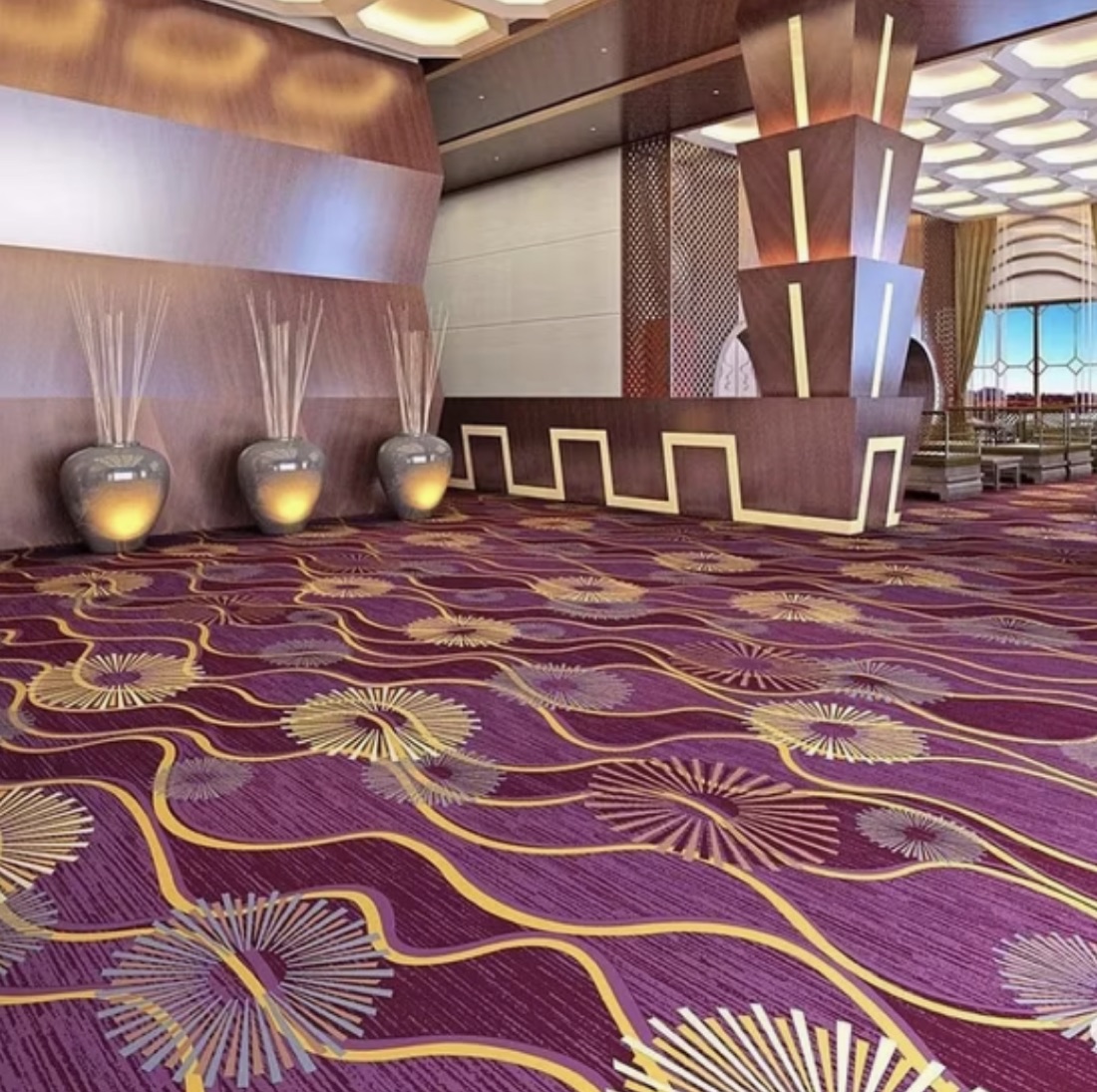
| Lobby | Feature wall (custom print, slat or 3D panel), hard-wearing rug or broadloom inset, acoustic decoration |
| Corridors | Type II fire-rated vinyl wallcovering, hospitality carpet or carpet tile, refreshed lighting |
| Guestrooms | Headboard feature wall (fabric or non-woven), SPC or broadloom flooring, blackout + sheer curtains |
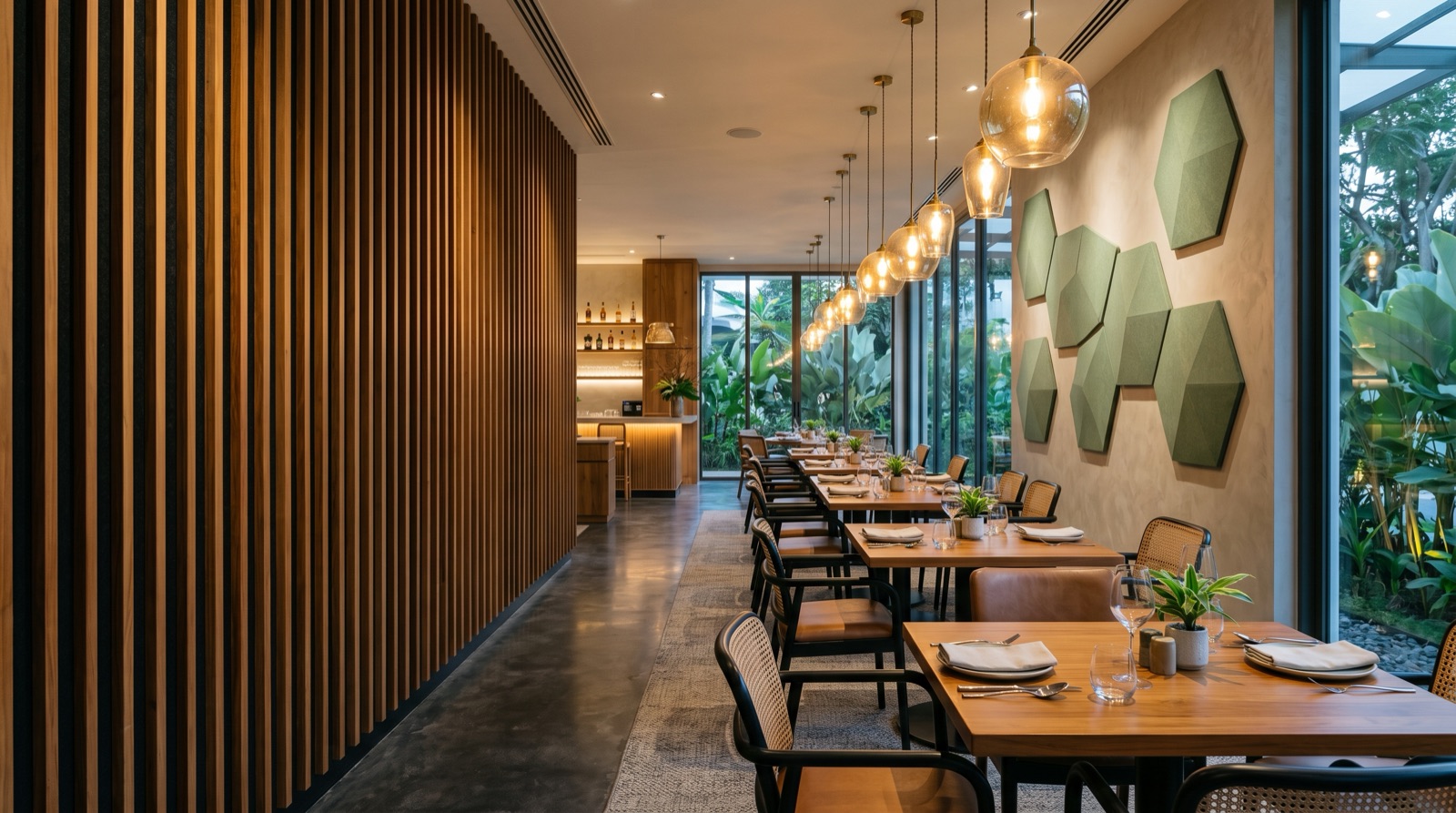
| F&B | Acoustic wall decoration, washable wallcovering, banquette fabric, statement flooring |
| Meeting rooms | Fabric-wrapped acoustic panels, carpet tile, dimmable lighting |
| Spa / pool areas | Moisture-safe wallcovering, slip-rated flooring, treated timber accents |
The 2026 design direction
- Warm minimalism, natural texture. Grasscloth and fabric walls, timber slat features, stone-look surfaces - calm rooms that photograph rich.
- Khmer craft accents. Local weaving patterns, rattan, carved motifs as feature moments - identity that imported chains cannot copy.
- Acoustic comfort as luxury. Quiet restaurants and lobbies read as premium; see our acoustic decoration guide.
- Biophilic touches. Planting, daylight, natural materials - the strongest trend in regional hospitality.
- Durability that photographs. Type II vinyls, solution-dyed carpets, performance fabrics: the look holds for years of OTA photos, not one opening shoot.
Renovating without closing: phasing and supply
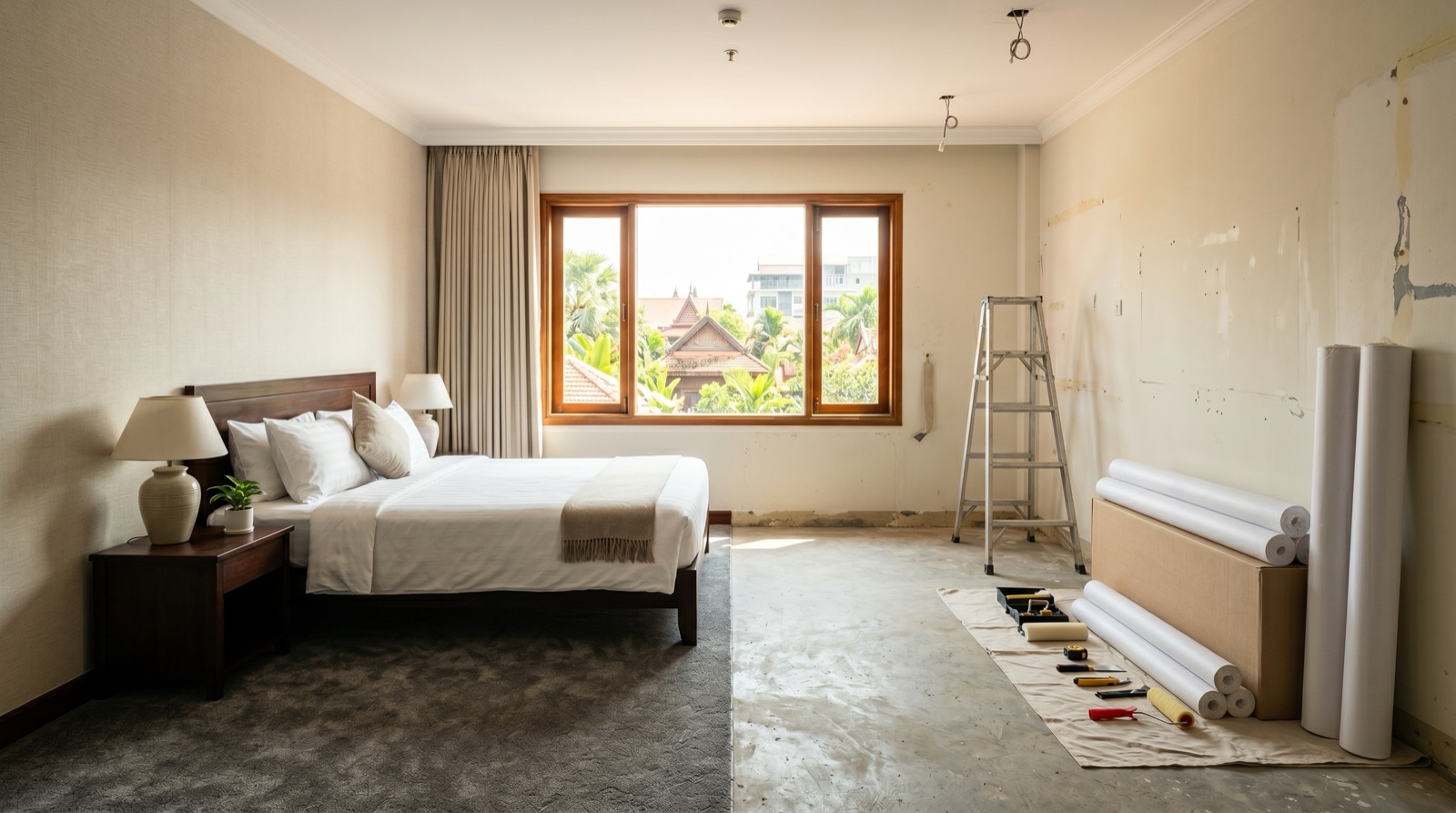
Standard practice is floor-by-floor: close one floor, renovate, hand over, move up. The supply chain is what makes or breaks it. Three rules: (1) Reserve the full material batch up front - every floor must match, so the whole project's wallcovering and carpet should come from single reserved batches with attic stock. (2) Get delivery dates in writing per phase - a two-week slip on one floor cascades through the program; our purchase orders carry a written date, on time or we credit the project. (3) Sequence deliveries to handovers - material should arrive days before its floor starts, not sit for months in a humid store room.
Indicative budgets per key
Broad bands for a surface-level refresh (walls, floors, windows, lighting, soft finishes - excluding bathrooms, MEP and structure), to frame early planning:
| Property level | Indicative refresh budget |
|---|---|
| Economy / guesthouse | $1,500 - $3,000 / key |
| Midscale | $3,000 - $8,000 / key |
| Upscale / boutique | $8,000 - $20,000+ / key |
Public areas are budgeted separately and typically run 20-35% of the rooms package for a balanced refresh. A formal materials quote against your actual room schedule is the only number that matters - we return one within a working hour.
Go deeper, area by area
If your walls are the main complaint - tired paint, scuffs, moisture shadows - start with why repainting hurts running hotels and the Siem Reap owner's zero-closed-nights renovation.
This guide is the property-wide view. For the room-level detail, we keep separate guides: the guest room renovation package (the 7-day room sequence, carpet vs SPC, what to spend per room), lobby design and materials (feature walls, acoustics, Khmer identity done well), and the seven renovation mistakes we keep watching properties make from the supplier side of the table.
The two failures to engineer out
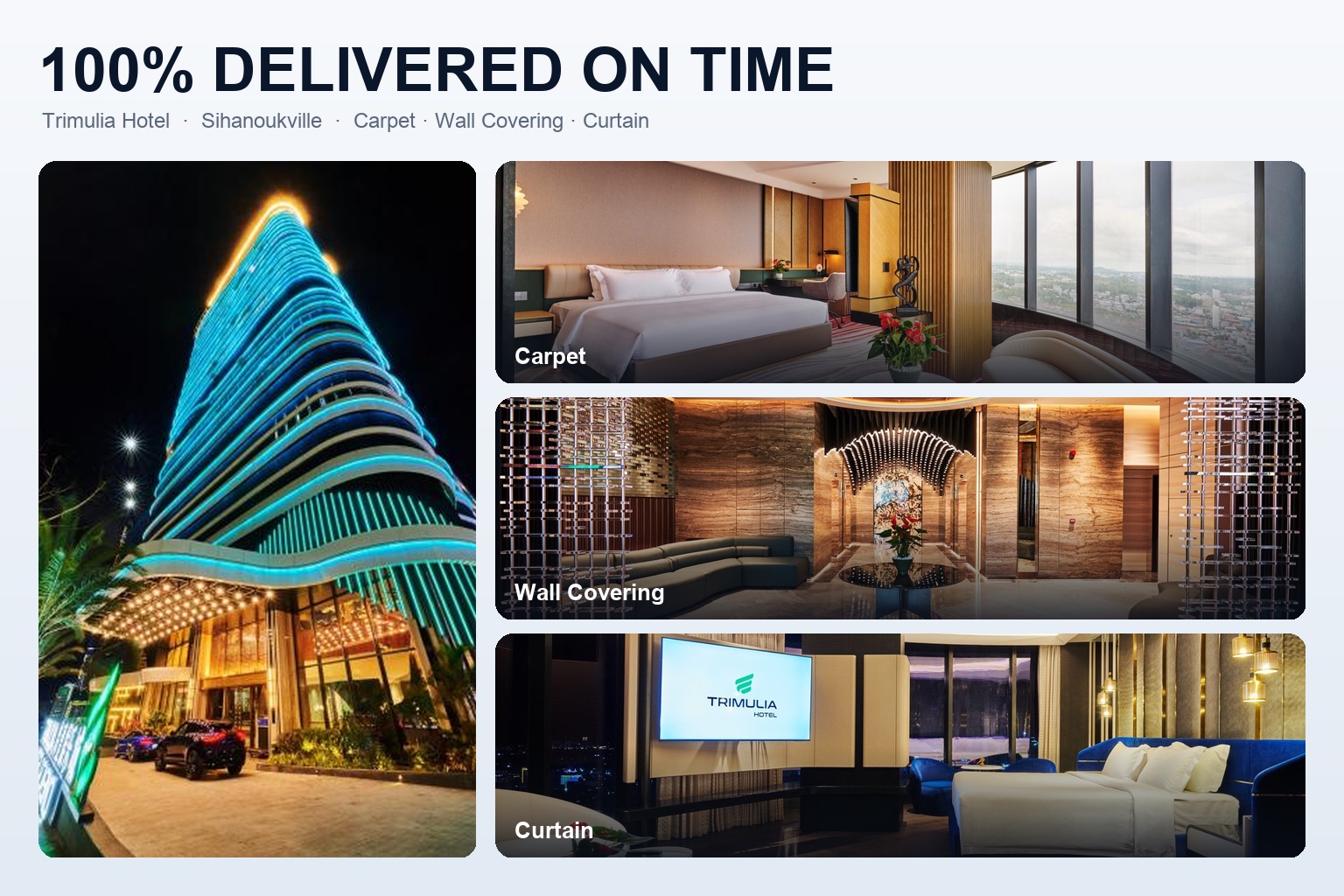
Ask any GM who has renovated in Cambodia: the schedule dies by late deliveries, and the design dies by spec substitution - the approved sample quietly replaced by a cheaper lookalike. Both are supplier failures, and both are preventable with paperwork: written delivery dates with consequences, and signed batch confirmation against the approved spec. That is precisely what our three written guarantees exist for, and why hotels like Grand Mansion and Trimulia appear in our project list.