A boutique hotel near the river in Siem Reap, open about ten years. Good staff, loyal guests, strong reviews - and walls that had quietly become the oldest thing in every photo. This is how the owner fixed all of them without going dark for a single night. Details changed for privacy; the numbers and the method are the real thing.
The corner the owner was painted into
The property had been repainted once before, in year five. The owner remembered exactly what it cost - and not the contractor's invoice. Two floors closed in rotation. Twelve days where the lobby smelled like a paint shop. A famous review from that fortnight that began, "Lovely staff, but the fumes..."
So in year ten, with the walls worse and tourism roaring back, the obvious move - paint again - was the one thing the owner refused to repeat. Closing in high season was unthinkable. Closing in low season meant burning the only months when the cash flow could breathe. There was never a good fortnight to smell like solvent.
That's roughly when we got the call, and the conversation that followed is the one this article is for.
Rethinking the question
The owner's question was "when can we afford to close?" The better question was "what finish doesn't need the hotel closed?" Once it's put that way, the answer is short: wallcoverings. A papered room takes a day, produces no odour, and sells the next morning. The renovation stops being an event and becomes a quiet routine running inside the operation.
The three-level plan
Walking the property took an afternoon. The plan that came out of it used three products doing three different jobs:
| Where | What | Why |
|---|---|---|
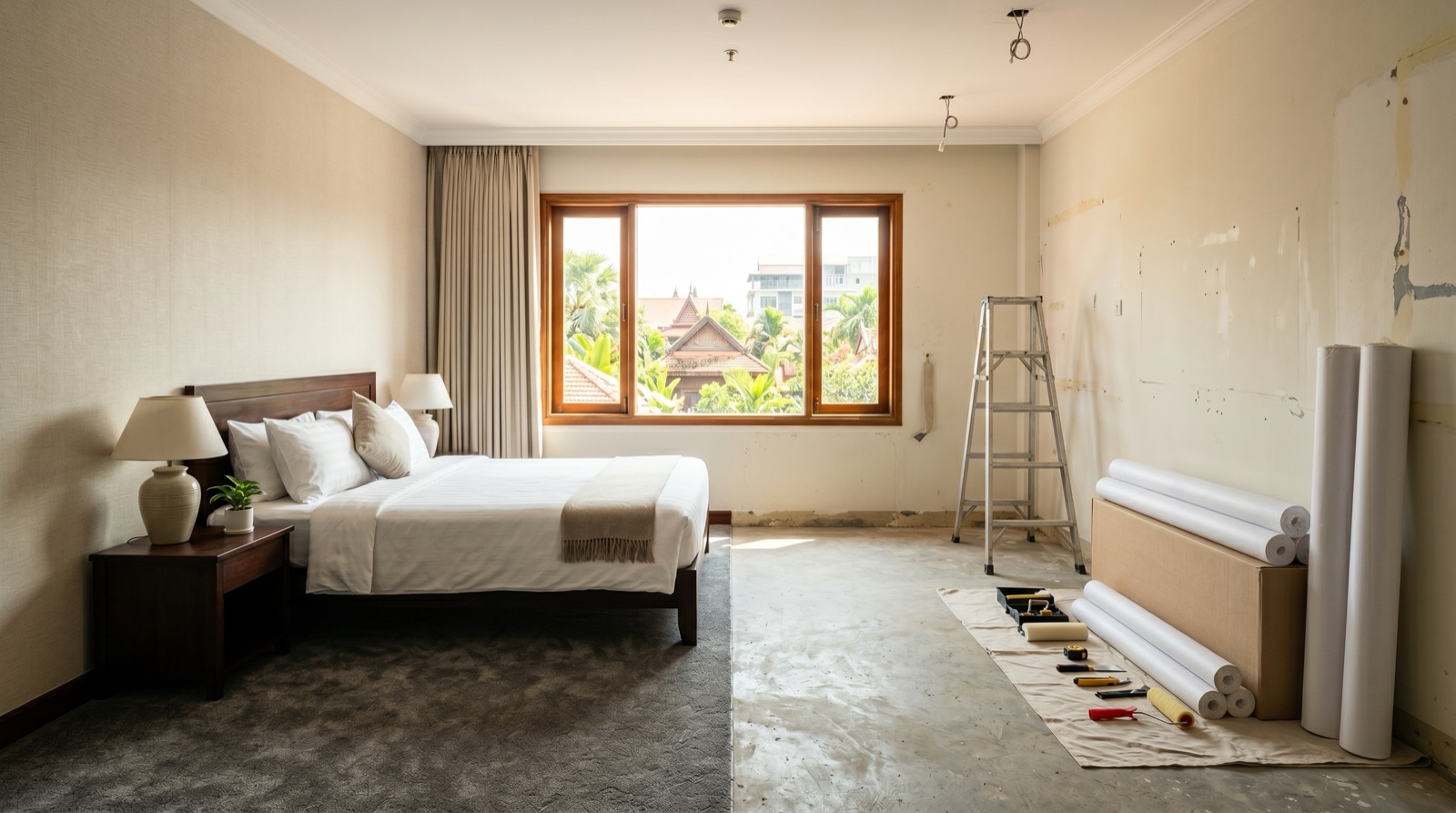
| 22 standard rooms | Non-woven wallpaper, warm neutral weave look | Maximum freshness per dollar |
| Corridors, stairs, reception back wall | Commercial Type II vinyl, fire-rated | Scrub-clean durability where trolleys and luggage live |
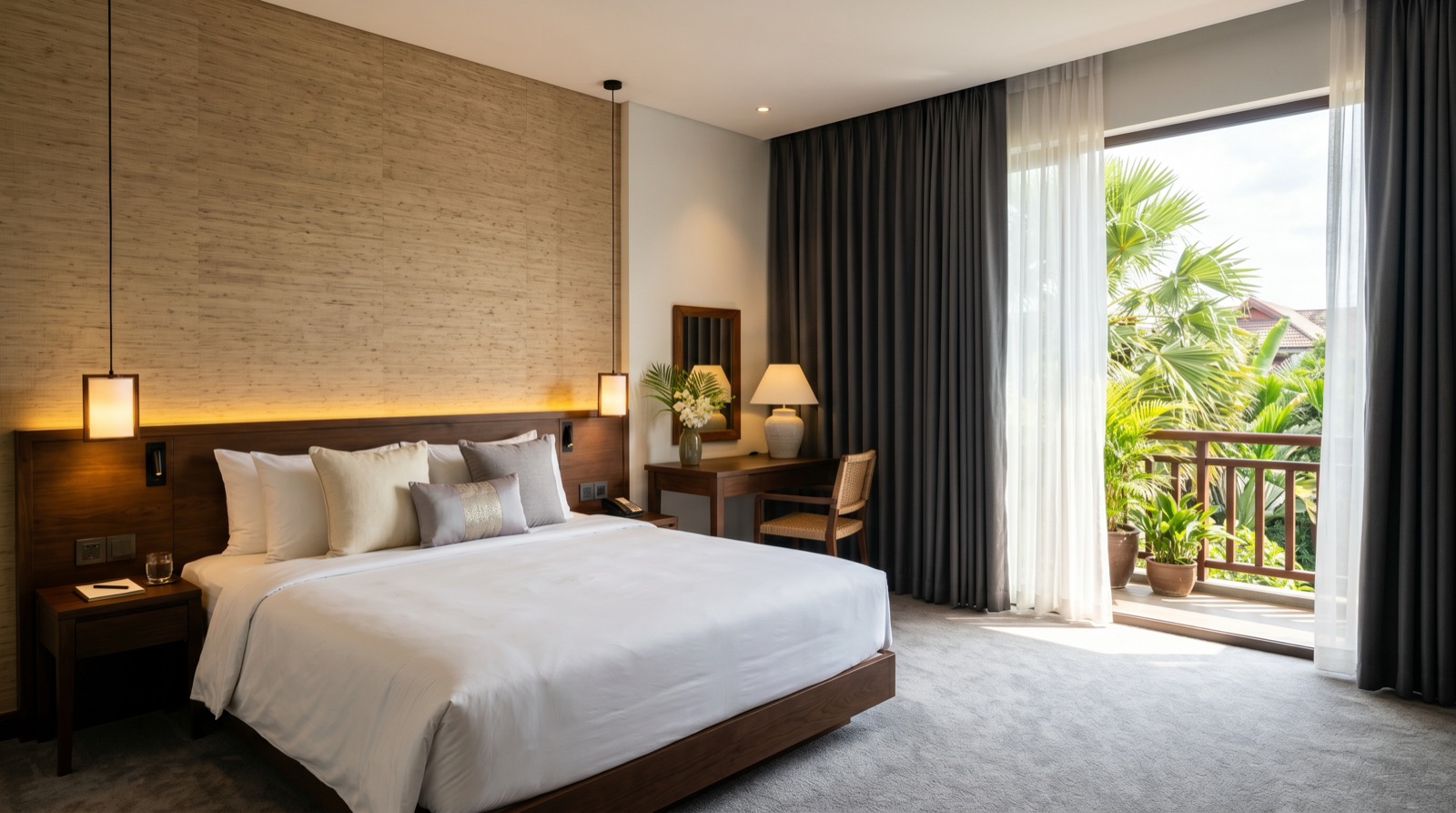
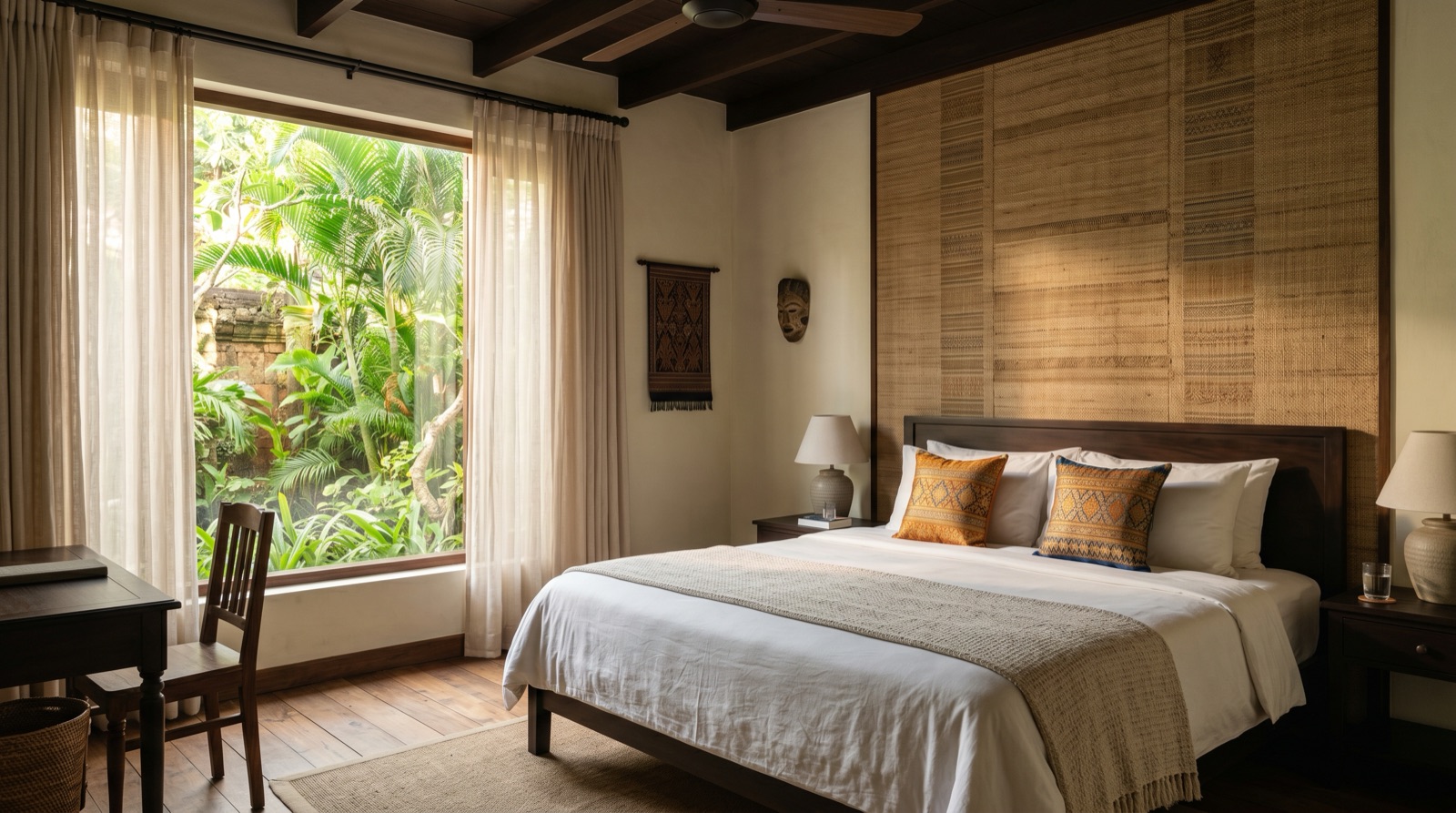
| 6 suites + lobby feature wall | Textile wallcovering, fabric headboard walls | The premium lift - texture guests feel and photograph |
One order, every product batch-reserved up front with attic stock for future repairs, delivery dates in writing, data sheets filed for the fire documentation. The boring paperwork - which, as we keep writing in the mistakes guide, is the whole game.
Eight weeks, zero closed nights
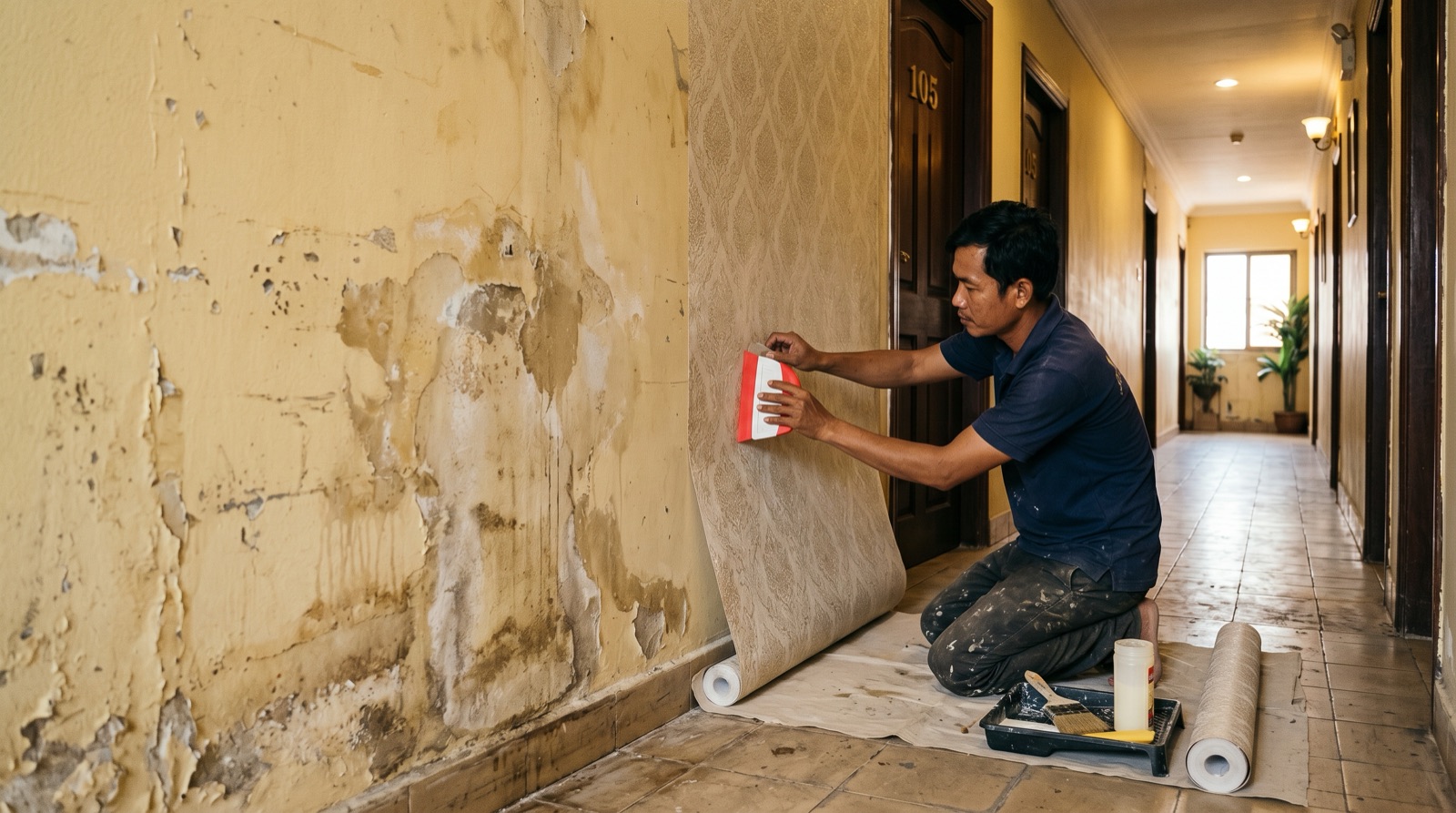
The rhythm settled quickly. Housekeeping flagged the day's target rooms at checkout. The two-person crew stripped, prepped and papered one room - two on light days - and the room went back into inventory the same evening. Corridors were done overnight in sections, vinyl up and furniture back before the breakfast service.
- Weeks 1-5: standard rooms, one to two a day around occupancy.
- Weeks 5-6: corridors and stairs, night sections.
- Weeks 7-8: suites and the lobby wall - the showpiece work, saved for last.
Total rooms-nights lost to the renovation: effectively the same-day turns, and nothing else. No smell, because there was nothing to smell. The owner's favourite detail: a long-staying guest checked out in week six and asked, on the way to the airport, when the renovation everyone had mentioned online was going to start.
What it changed
The photos got reshot, the booking listings got new lead images, and the property started winning the comparison it had been losing - against newer hotels with flatter, plainer walls. The suites with fabric walls took a rate increase without a murmur. And the next time the walls need attention, the vinyl corridors will wipe clean and the bedrooms re-paper one room at a time, in stride, the way wall maintenance should work.
The owner's verdict, roughly quoted: "Last time we renovated, we apologised to guests for two weeks. This time nobody noticed. That's the whole difference."
The playbook, if you want it
None of this was clever. It was the right product at three levels - wallpaper for value, vinyl for traffic, wall fabric for the premium rooms - plus batch reservation and dates in writing. The full argument for ditching the paintbrush is in why repainting hurts Cambodian hotels, and the property-wide planning numbers live in the hotel renovation guide.
If your walls are at year five or beyond - in Siem Reap, Phnom Penh, Sihanoukville or anywhere a guest sleeps - send us photos and a room count. The plan above takes us a working hour to turn into a quote.