Five to ten years after opening, almost every hotel in Cambodia hits the same wall - literally. Scuffed corridors, tired bedrooms, moisture shadows behind the aircon. The reflex is to repaint. And repainting is exactly where the pain starts.
We hear this story in Phnom Penh, Siem Reap, Sihanoukville, and from resorts in Kampot and Kep. The building is fine. The operation is fine. But the walls quietly age in every booking photo, and the property starts losing comparisons against places that opened last year.
So the owner calls a painting contractor, and the maths gets ugly fast.
What repainting actually costs a running hotel
The quote per square metre is the smallest number in the story. Here's the rest of it:
- Rooms out of service - for days each. Preparation, filler, drying time between coats. A room is realistically unsellable for most of a week, and you can't do one room quietly; painting works in zones.
- The smell. Fresh paint off-gasses into corridors and neighbouring rooms for 10 days to two weeks. Guests smell it at check-in. Some mention it in reviews, which is the most expensive sentence a hotel can earn.
- The disruption. Drop sheets in corridors, ladders in lifts, crews moving through the building. The hotel looks like a building site to every guest who walks past.
- The short cycle. Paint in a tropical hotel looks tired again in 3-4 years. Then you pay the whole bill again - the money, the empty rooms, the smell.
The alternative: walls that change in a day, with guests in the house
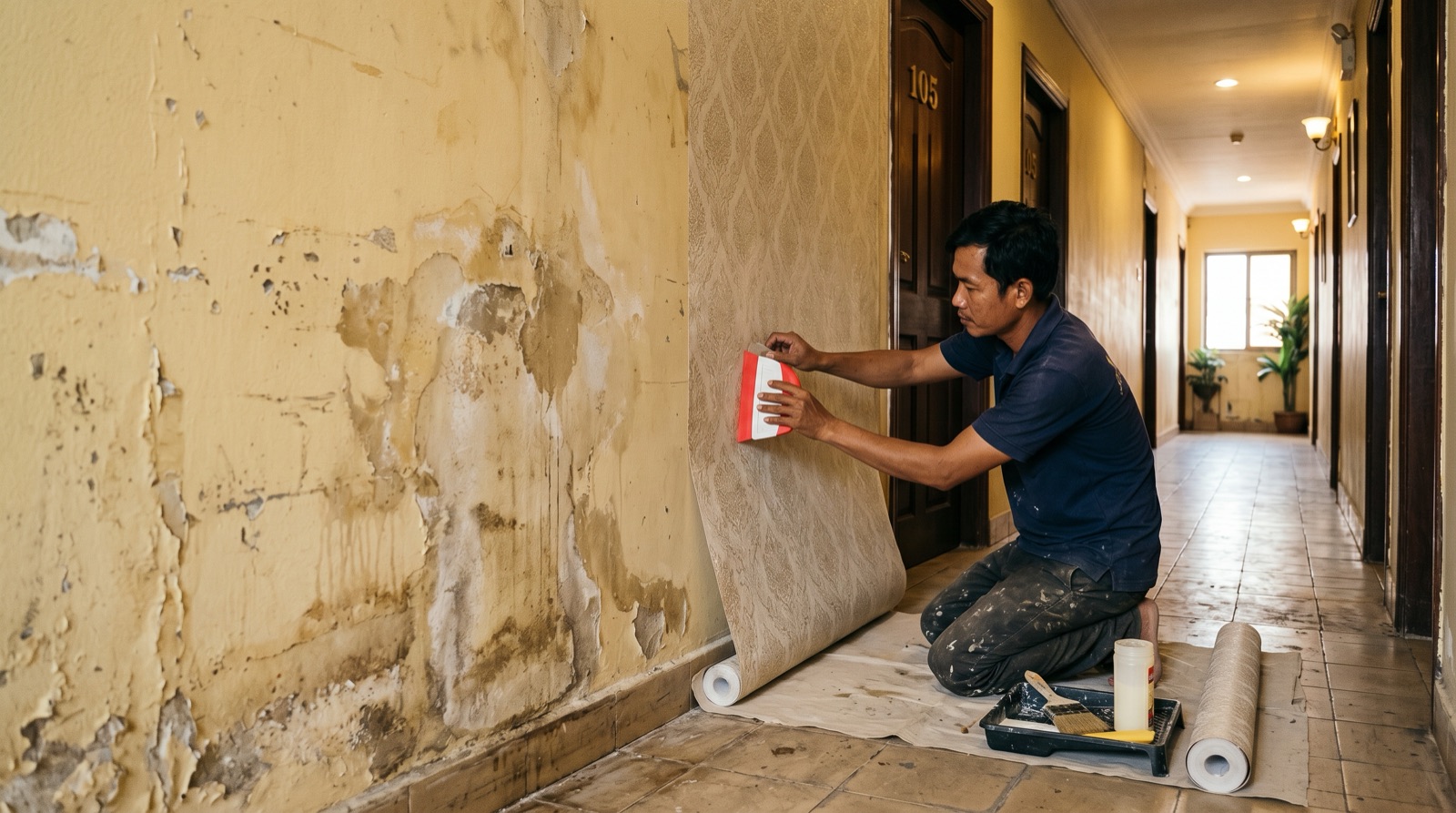
Wallcoverings solve the operational problem, not just the cosmetic one. A trained two-person crew strips and papers a guest room in a single day. No odour. No drying days. No drop sheets down the corridor. The room that was tired on Monday checks a guest in on Tuesday, and the guests either side never heard a thing.
That single fact - renovation without closing - is why hotels across Asia switched their wall strategy from paint to wallcoverings years ago.
| Repainting | Wallcovering | |
|---|---|---|
| Room out of service | 4-6 days | 1 day, sometimes 2 |
| Smell | 10-14 days of off-gassing | None |
| Guests nearby during work | Unhappy | Unaware |
| Surface life in tropical use | 3-4 years | 7-10 years (commercial vinyl) |
| Hides hairline cracks and patching | No - shows them | Yes |
| Washable after scuffs | Touch-up repaint | Wipe clean (vinyl grades) |
Three levels: pick by what the wall has to do
1. Wallpaper - the cost-saving refresh
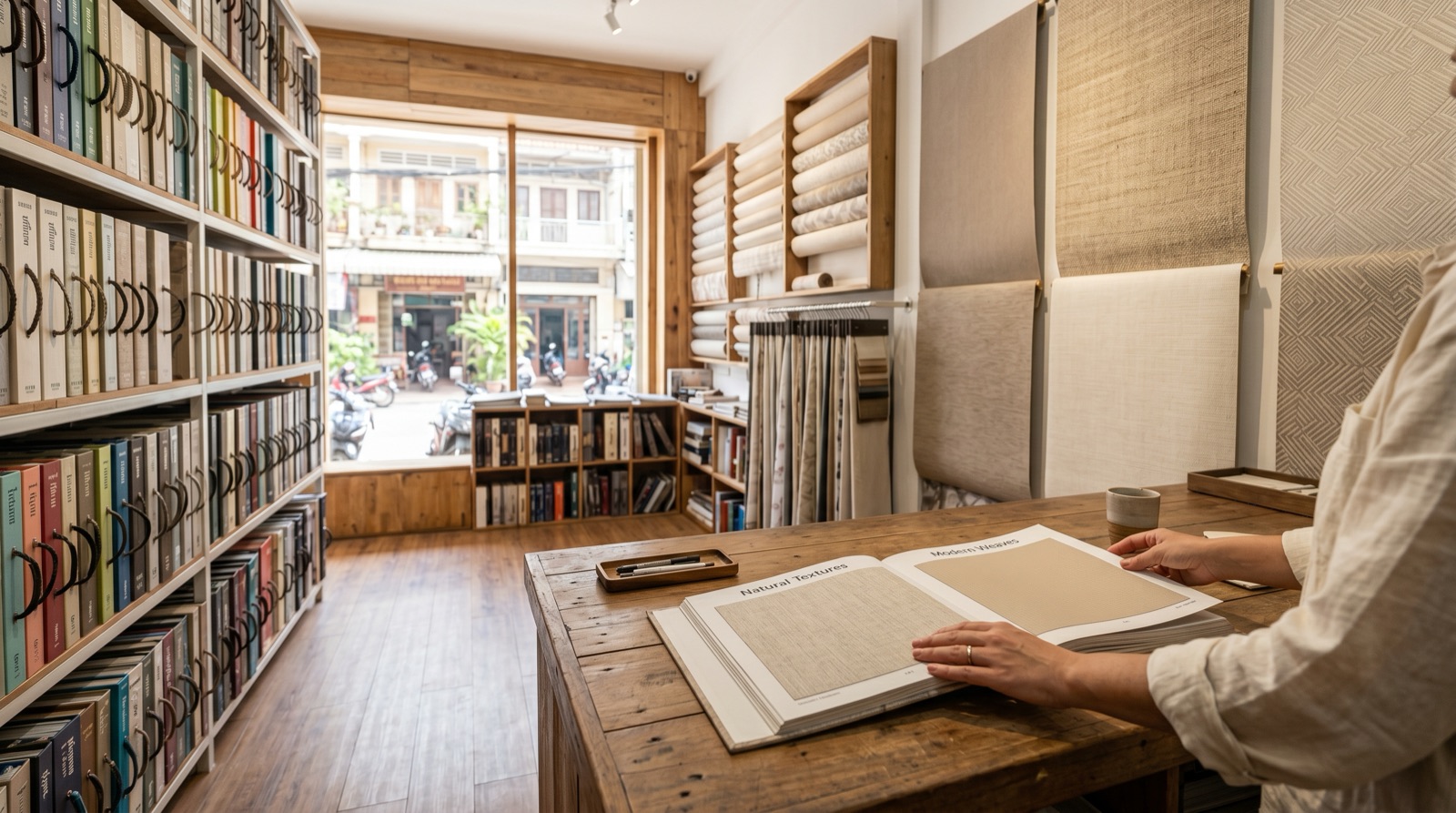
Standard non-woven wallpaper is the fastest, most economical way to make a tired bedroom look new. Thousands of designs, quick installation, easy future replacement. Right for guest bedrooms and low-traffic walls where the goal is simply: look fresh again, this week, without a big bill. Indicatively $3.50-8.50/m2 supplied.
2. Vinyl wallcovering - the premium workhorse
Commercial Type II vinyl is what business hotels worldwide run on. Washable, scrubbable, fire-rated, and it shrugs off luggage scuffs and cleaning chemicals for seven to ten years. This is the answer for corridors, stairwells, public areas and any property that wants to renovate once and stop thinking about walls. Indicatively $8-18/m2 supplied. Full details in our wallpaper guide.
3. Wall fabric - the premium upgrade
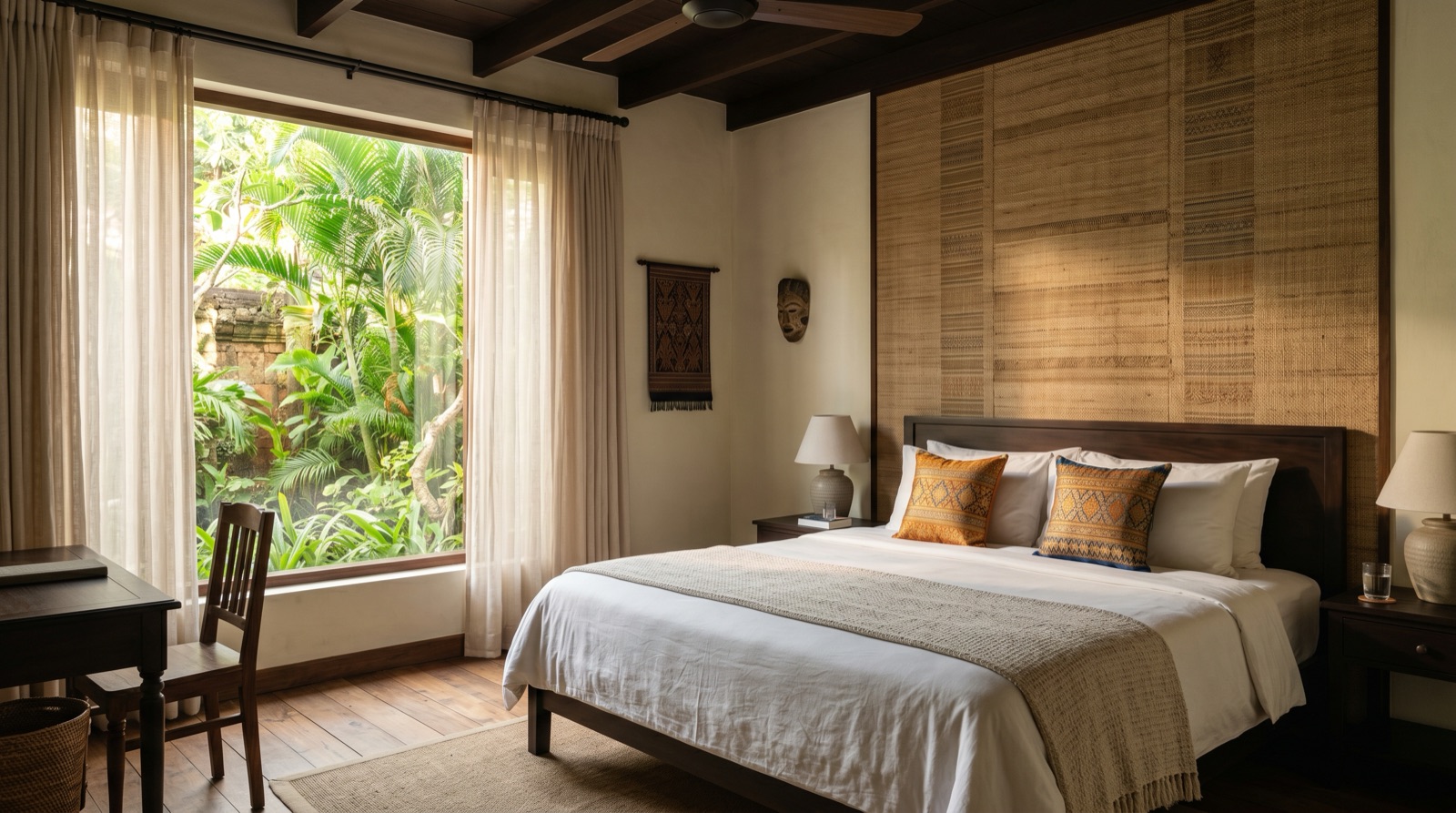
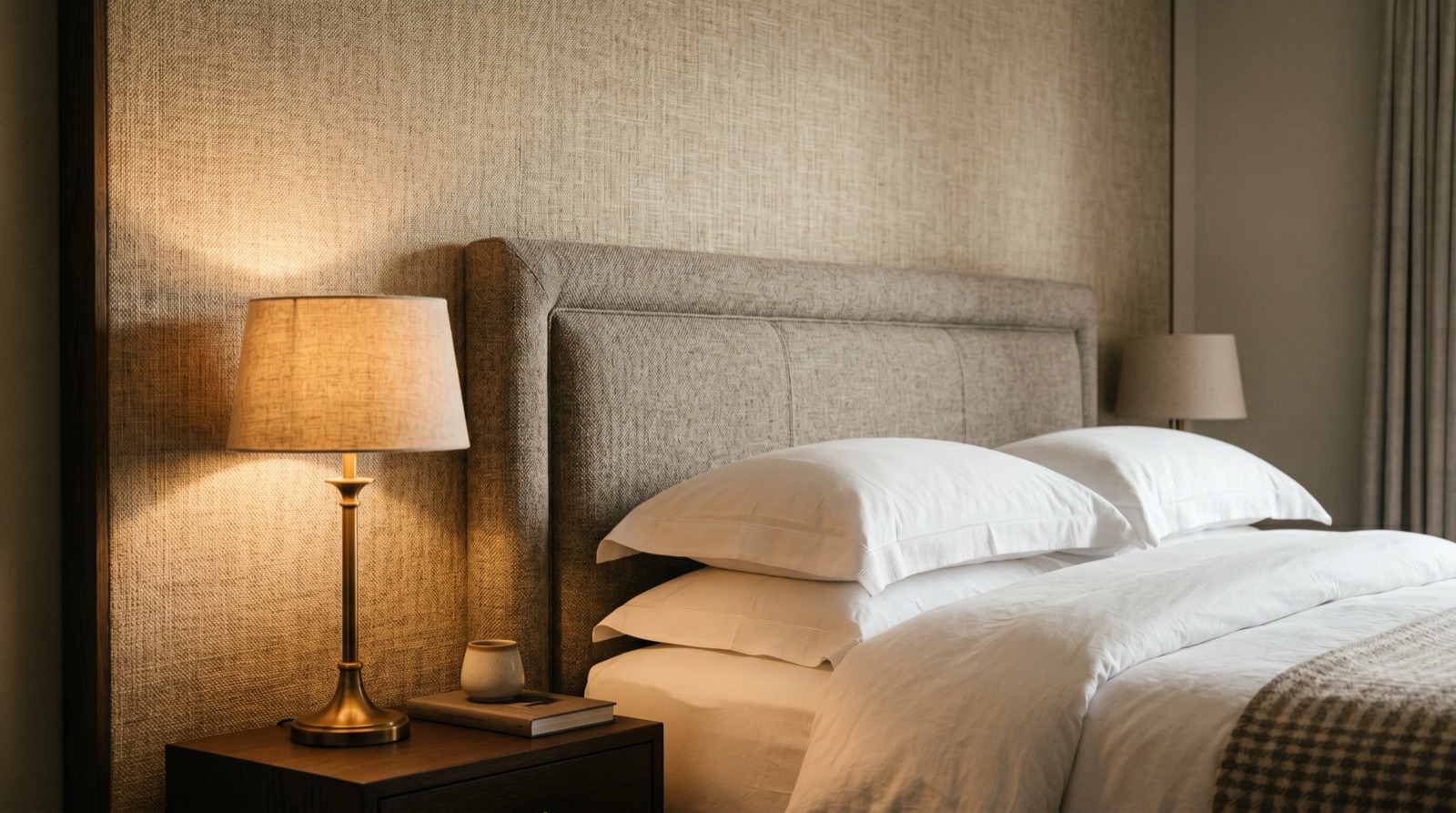
When the goal isn't just "fix the walls" but "move the property upmarket," textile wallcoverings do what paint never will: warmth, depth, acoustic softness, the feel guests photograph and can't name. A fabric headboard wall in every room, or full fabric treatment in suites and the lobby, repositions the hotel a category up. Indicatively $12-45/m2. The complete options are in our wall fabric guide.
Most renovations we supply mix all three: wallpaper where budget matters, vinyl where traffic hits, fabric where the property earns its premium.
One more advantage paint can't match: it hides the years
A ten-year-old wall is never flat. Hairline cracks, old filler, patched conduit lines, moisture shadows. Paint shows all of it - often more clearly after the fresh coat. A good wallcovering bridges and hides it. The wall doesn't just change colour; it stops looking like a repaired wall.
How the room-by-room program runs
The operational pattern that works: reserve the full batch up front (so room 12 matches room 48 - see mistake number three), then run a small crew through the house at whatever pace occupancy allows. Two rooms a day in low season, one a day when you're busy. The hotel never closes, never smells, never apologises.
We supply the materials with a written delivery date, a signed batch confirmation, and data sheets within a working hour - and we can recommend installation crews who do exactly this kind of live-hotel work. To see how it plays out for a real property, read the Siem Reap owner's story.